

Welcome to one of Sydney’s most beautiful boating areas
One of the best things about chartering with Church Point Charter is where the boats live.
From our base at Princes Street Marina in Newport, you can explore Pittwater, Cowan Creek and the Lower Hawkesbury — a beautiful mix of calm water, national park shoreline, quiet bays, waterfront villages and places that feel a world away from the city.
It is a special part of Sydney, and one of those places that makes the most sense from the water. You can spend the day swimming off the boat in Pittwater, tuck into a peaceful bay for the night, wander ashore for lunch where access is suitable, or head further into Cowan Creek and the Hawkesbury on a longer charter.
You do not need to rush. In fact, the best charters usually happen when you slow down, choose a simple plan, and give yourself time to enjoy where you are.
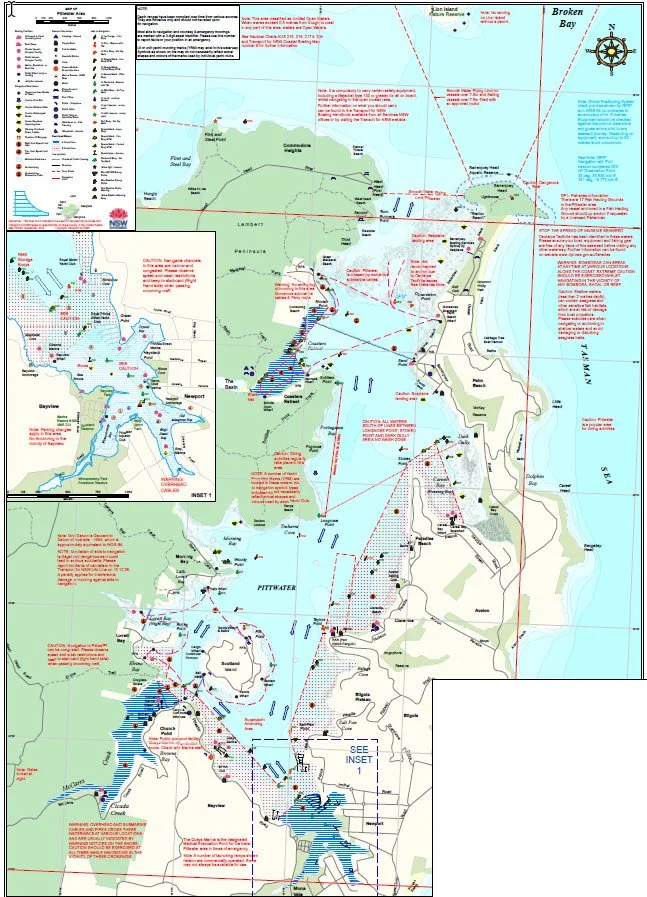
Pittwater
A few simple rules that make the area work
The waterways here are beautiful because they are shared carefully — by locals, visitors, wildlife, national parks, ferry services, marinas and other boaters.
To help keep things safe and simple, Church Point Charter vessels use authorised moorings only. That means you do not need to anchor during your charter, and anchoring is not permitted except in an emergency.
There are also a few places where it might look tempting to pull alongside — a wharf, jetty, marina berth or restaurant pontoon — but these can only be used if access has been clearly arranged and approved in advance.
The other big thing to remember is daylight. These are daytime-operated charter vessels, so all movement needs to happen in daylight, and the boat needs to be safely secured to an authorised mooring before dark.
That might sound like a lot, but in practice it is simple: choose where you want to explore, allow plenty of time, use the moorings, and ask us if you are unsure.
Pittwater: calm, connected and easy to love
Pittwater is often where guests fall in love with the area.
It is sheltered, scenic and easy to enjoy without travelling far. You can cruise slowly past Scotland Island, stop for a swim, find a public mooring, watch the afternoon light move across the water, or simply sit back and enjoy the feeling of being away without really being far from Sydney at all.
Pittwater is especially good for:
first-time self-drive charters
relaxed day trips
swimming and lunch onboard
families
easy overnight stays
guests who want a beautiful trip without covering big distances
Many guests spend their whole charter within Pittwater and have a wonderful time. You do not need to “go far” to feel like you have escaped.
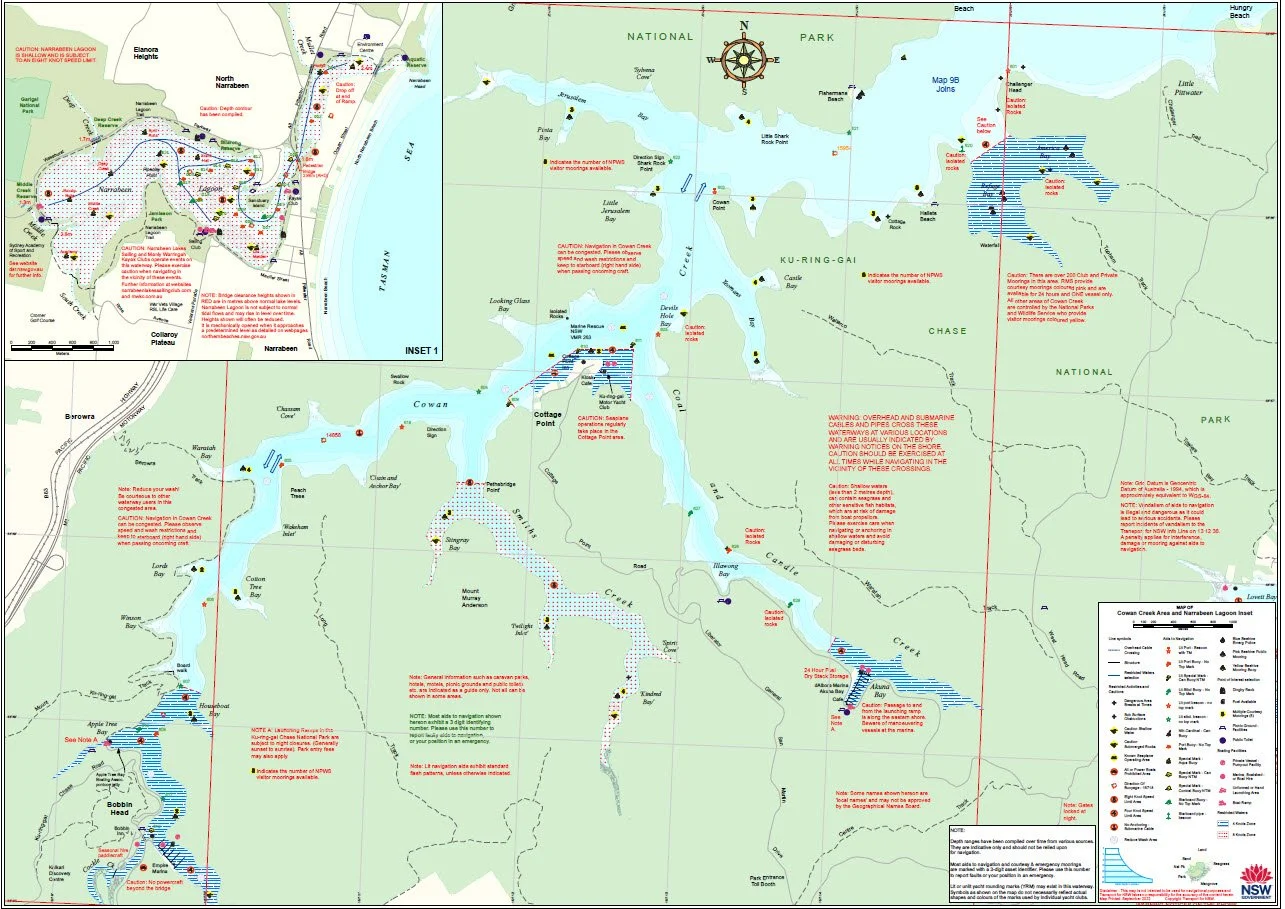
Cowan Creek and the quieter side of the Hawkesbury
If conditions are suitable and you are planning a longer charter, Cowan Creek opens up another side of the area.
This is where the water becomes quieter, the bush feels closer, and the pace drops even further. Places like Refuge Bay, America Bay, Jerusalem Bay, Smiths Creek, Cottage Point and Bobbin Head each have their own feel — some are better for swimming and scenery, while others may suit a planned lunch stop or guest transfer.
Cowan Creek is one of our favourite parts of the cruising area because it feels peaceful and protected. It is also a place where a little planning makes a big difference. Mobile reception can be patchy in some spots, distances are longer than they look on a map, and you need to allow plenty of time to be settled on a mooring before dark.
The Lower Hawkesbury: for longer, slower adventures
For guests on longer charters, the Lower Hawkesbury offers a real sense of space.
The landscape feels broader and more remote, with deep water, sandstone, bushland and river communities tucked along the shore. It is a beautiful area for guests who want to settle into the rhythm of the boat rather than rush from stop to stop.
Because the distances are greater, the Hawkesbury is best approached with a simple plan: organise supplies before you go, check your timing, keep an eye on weather, and allow for daylight travel between moorings.
If your route involves crossing between Pittwater and Cowan Creek or the Hawkesbury, conditions around West Head and Broken Bay matter. CPC operating limits always apply, and we will help you understand what is suitable before you depart.
Moorings make boating simple
One of the best things about this area is the network of moorings.
Instead of needing to anchor, you can pick up authorised public or national park moorings in many popular bays. It makes the whole experience easier, especially for guests who are new to self-drive boating.
You will see different types of moorings around the area, including public moorings, NPWS moorings, private moorings and some club or marina moorings that may require permission. Not every empty mooring is available to use, so if you are unsure, check with us before departure or choose a clearly marked public or national park mooring.
A simple way to think about it:
If it is clearly public, national park or approved for your use, it is usually straightforward. If it looks private or you are not sure, leave it alone.
Going ashore, lunch stops and local access
Part of the fun of this area is that you can mix time onboard with little shore adventures — a walk, a swim, a café, a lunch stop, or meeting friends along the way.
The important thing is to plan how you will get ashore before you rely on a stop.
In many places, the best approach is to leave the charter boat safely on an authorised mooring and use the tender, a hired outboard, a water taxi or pre-arranged visitor access. Some marinas, clubs and venues may be able to help with casual access, but it needs to be arranged ahead of time.
A restaurant booking is not the same as permission to tie up the boat. If you are planning lunch at Palm Beach, Patonga, Cottage Point, Bobbin Head, Akuna Bay or anywhere else, check access first and give yourself plenty of daylight.
Guests joining or leaving during the charter
It is possible for guests to join or leave during a charter, and many groups plan this for longer trips.
The easiest option is often a water taxi, especially if the vessel is already on a mooring. In some locations, guests may be able to catch a ferry to The Basin, drive to Cottage Point or Bobbin Head, or meet near an agreed access point, then transfer by tender where conditions are calm and suitable.
Tender transfers should be short, careful and never rushed. Avoid overloading the tender, take extra care with children, and remember that all transfers need to happen in daylight.
Near our Newport base, CPC may also be able to assist with transfers by workboat on request, subject to availability, weather and charges.
Staying connected
You will usually have mobile reception around much of Pittwater, but coverage can become patchier in deeper parts of Cowan Creek and the Hawkesbury.
For most guests, that is part of the charm — but it is worth planning around.
Before heading further afield, save key phone numbers, confirm any restaurant bookings, water taxis or guest transfers, and make sure everyone knows the plan. It is much easier to organise things before you are tucked into a quiet bay with one bar of reception.
The best charters keep it simple
It is tempting to look at the map and try to fit everything in.
Our advice is simple: do less, enjoy more.
Choose an area, allow plenty of time, have a backup plan, and make sure you are settled on a mooring before dark. Some of the best moments happen when you stop moving — a swim off the back, lunch in the cockpit, kids spotting fish, the sound of birds in the trees, or waking up to still water in the morning.
That is what this part of the world does best.
Quick planning checklist
Before you head off, it helps to think about:
Where do you want to spend most of your time?
Are you staying within Pittwater or heading further afield?
Do you need to cross West Head?
Where will you be on a mooring before dark?
Are you planning a lunch stop or shore visit?
Have you confirmed access if you need a marina, restaurant or visitor berth?
Will guests join or leave during the trip?
Do you need a water taxi or tender transfer?
Have you organised food, drinks, ice and supplies?
Do you have a simple backup plan if the weather or timing changes?
A little planning goes a long way — and if you are unsure, just ask us. We are happy to help you shape a charter that suits your group, your confidence and the conditions on the day.
